Science News
 American
Science News for 3 June 2026
American
Science News for 3 June 2026
Ötzi's frozen remains may harbour metabolically active microbes
New Scientist - 3 Jun 2026 02:00
Researchers studying a 5300-year-old mummified man have identified bacteria that lived in his gut when he was alive, as well as cold-tolerant fungi that colonised his body after death
Brains Internal Disappointment Meter Forces Behavioral Change
Neuroscience News - 3 Jun 2026 20:47 Can recording a single group of deep-brain cells tell scientists exactly how let down you feel? A new study identifies a group of neurons within the lateral habenula that function as a biological "disappointment mete...
Daddy longlegs may be capturing and devouring frogs in the tropical forests of South America
Live Science - 3 Jun 2026 20:46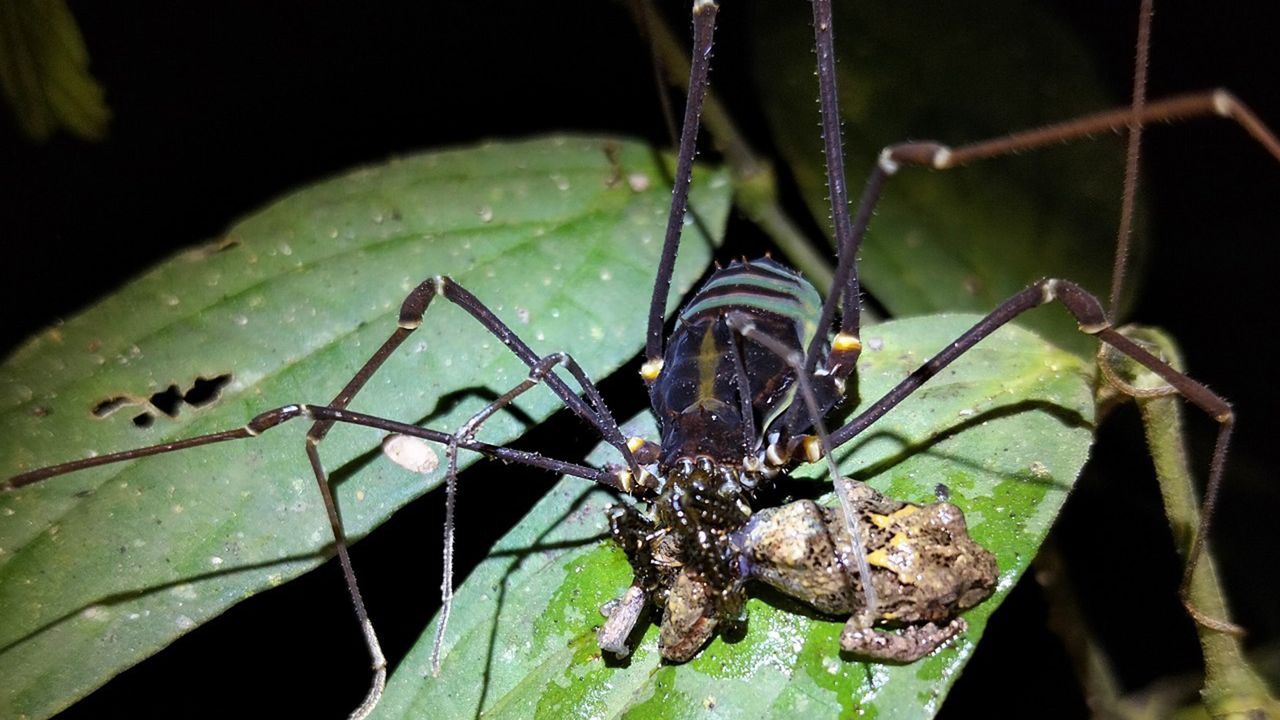 Daddy longlegs have been observed eating frogs in South America, suggesting that these arachnids may be predators of vertebrates.
Why the Brain Doesnt Need Choices to Generate Intent
Neuroscience News - 3 Jun 2026 20:03 A new study rejects the traditional "sandwich model" which defines decision-making as a discrete cognitive step between perception and action.
Google wants to release 64 million bacteria-riddled mosquitoes across California and Florida. Here's why scientists are enthusiastic.
Live Science - 3 Jun 2026 19:40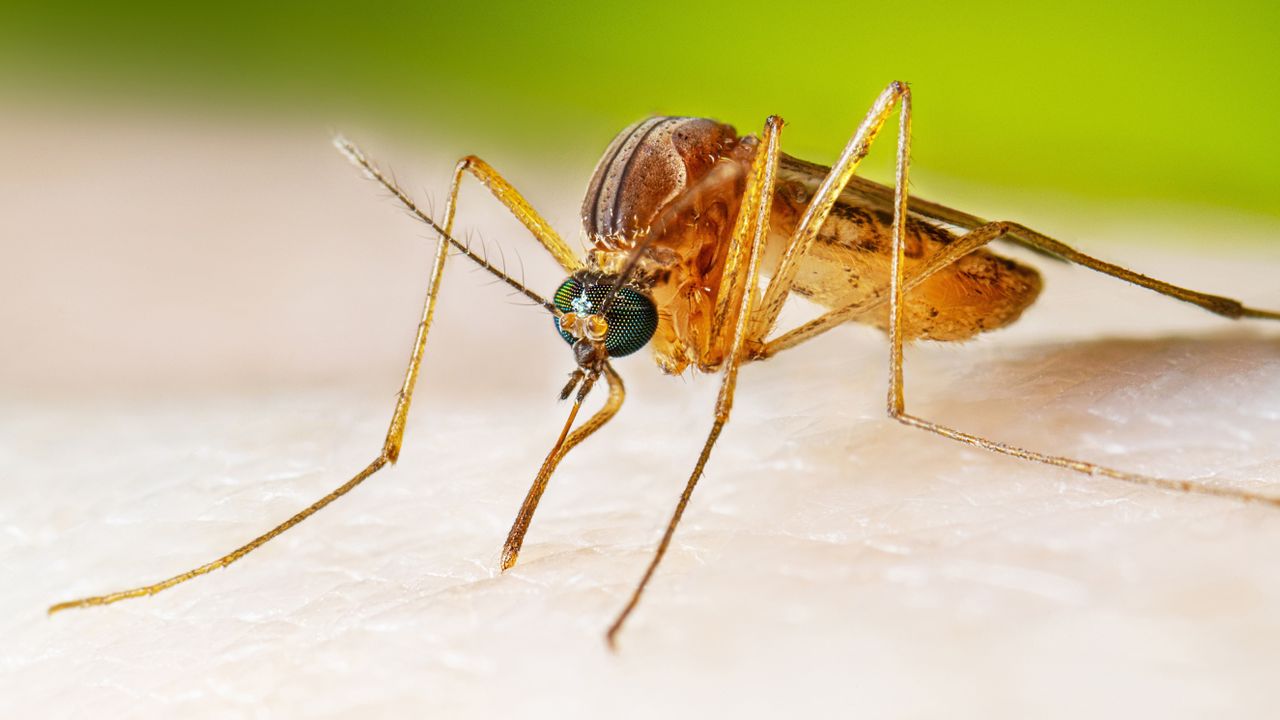 Google has applied for an experimental mosquito release permit to deploy millions of non-biting southern house mosquitoes that it has infected with the bacterium Wolbachia pipientis, in an effort to reduce mosquito-borne...
Brain Integrates Paper Book Narratives Faster Than Digital
Neuroscience News - 3 Jun 2026 19:03 Can reading a book on a tablet alter how your brain maps a story line? A new study reveals that reading on paper allows the brain to organize narrative information with less effort than digital screens.
The looming El Niño could be bad - but much worse is to come
New Scientist - 3 Jun 2026 19:00
Global warming will amplify the impacts of El Niño events, and could also make them much stronger and more far-reaching
Everyone is Lying to You for Money is a must-watch exposé of crypto
New Scientist - 3 Jun 2026 19:00
Actor Ben McKenzie explores the world of crypto in an entertaining documentary that doesn't shy away from calling out those who have promoted the currency
Explore the mind-bending and paradoxical art of M C. Escher
New Scientist - 3 Jun 2026 19:00
A new retrospective of the artist beloved by mathematicians opens this week. Get up close to the art with our interactive story
Alice Roberts: 'We are fundamentally, at the end of the day, animals'
New Scientist - 3 Jun 2026 19:00
Why do we have big brains? Or walk on two legs? Biological anthropologist and broadcaster Alice Roberts talks human exceptionalism, evolution and her new book Humans with Michael Marshall
Superintelligent machines may well need us after all
New Scientist - 3 Jun 2026 19:00
Despite AI's dizzying improvements in mathematical ability, its successes show just how integral human mathematicians are to the scientific process
New Scientist recommends a deep dive into our organs by Giulia Enders
New Scientist - 3 Jun 2026 19:00
Giulia Enders made her name with Gut, an exploration of our intestines. Now, in the compelling follow-up Organ Speak, shes listening to what our other organs are telling us
An encyclopedia formed from AI hallucinations - what could go wrong?
New Scientist - 3 Jun 2026 19:00
Feedback discovers Halupedia, an online encyclopedia that is 100 per cent generated by AI, offering such delights as the 19nd century and The Society for the Prevention of Unnecessary Tuesdays
Cortisol Pathway Discovered to Close Early Brain Plasticity
Neuroscience News - 3 Jun 2026 18:11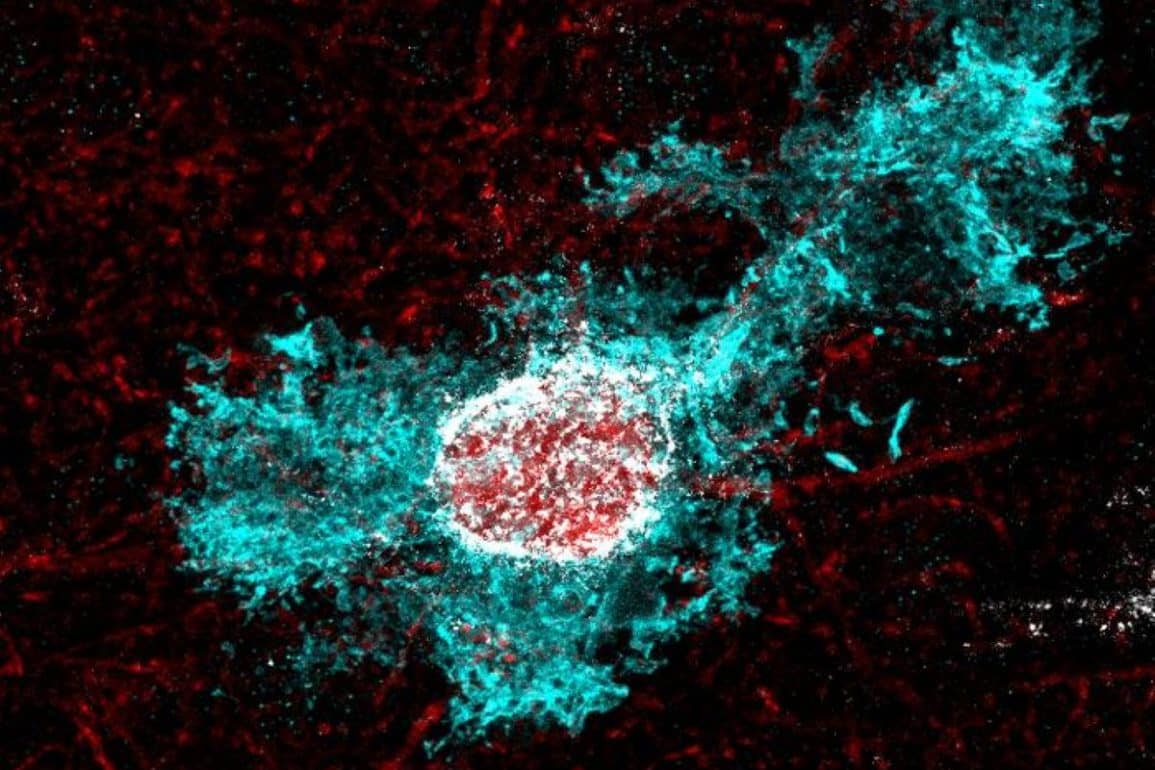 A new study reveals that the stress hormone cortisol plays a critical role in closing early-life brain plasticity windows.
Air Pollution Degrades Semantic Memory
Neuroscience News - 3 Jun 2026 17:40 Long-term exposure to fine particulate air pollution (PM2.5) is directly associated with lower semantic memory.
Temperature gaps help sneeze clouds stay denser and travel farther, experiments show
Phys.org - 3 Jun 2026 17:30
When a person coughs or sneezes, they expel a cloud of microscopic particles capable of carrying viruses and bacteria that act as vectors for respiratory diseases such as flu, COVID-19 or tuberculosis. Understanding how ...
Water-wave tweezers steer tiny 'surfers' without touching them
Phys.org - 3 Jun 2026 17:20
Summer brings with it the sight of surfers moving seamlessly across wave crests, with ocean waters carrying them along coastlines. A team of scientists has now created a similar phenomenon-with small objects rather than ...
Are Long-Term Antidepressant Benefits Overstated?
Neuroscience News - 3 Jun 2026 17:17 A new study reveals a lack of robust evidence proving that antidepressants prevent relapse beyond 12 months.
CERNs new chief on the gamble that could fix our picture of reality
New Scientist - 3 Jun 2026 17:00
Mark Thomson has taken the reins at CERN just as particle physics confronts some of its deepest unknowns - and faces hard choices about what comes next
Earth has a mysterious triple symmetry that may influence its climate
New Scientist - 3 Jun 2026 17:00
A circle running along the 27 east and 153 west meridians divides the globe into two halves with equal reflectivity - and this may have implications for solar geoengineering schemes
'In an unrecoverable state': NASA confirms MAVEN spacecraft is officially dead after loss of signal behind Mars
Live Science - 3 Jun 2026 16:55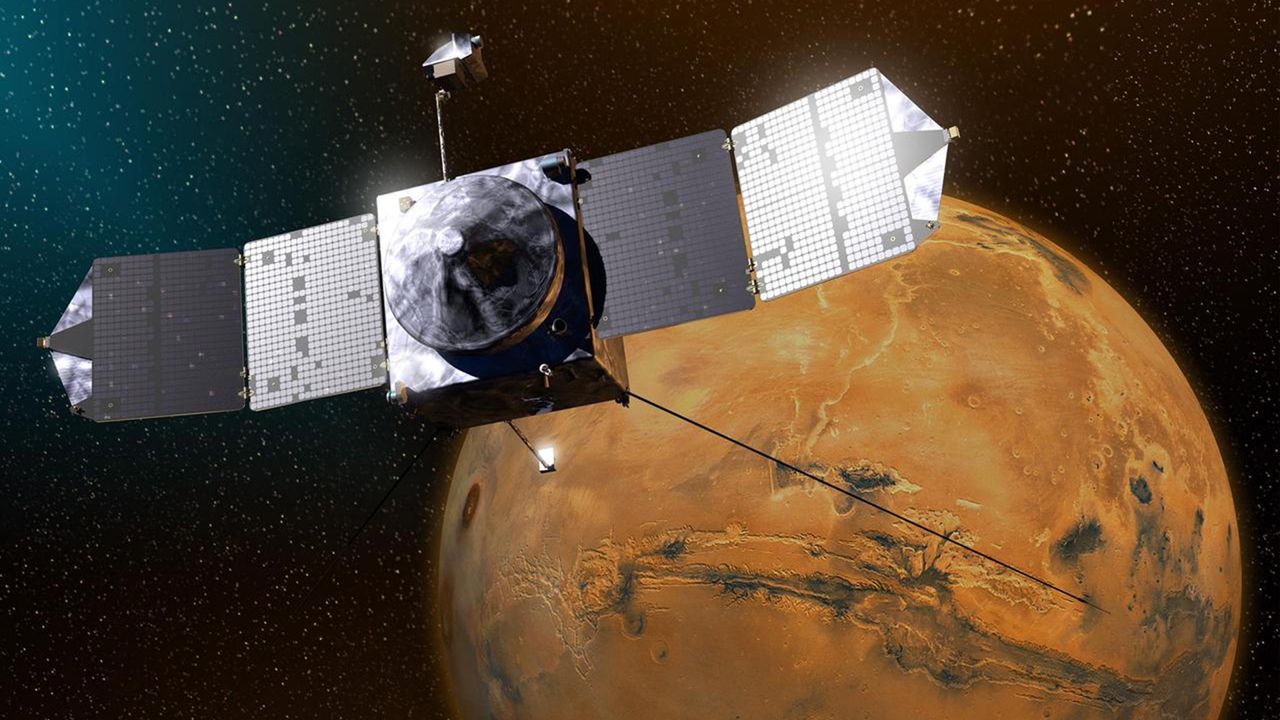 NASA has confirmed its MAVEN spacecraft is officially dead after losing contact with the probe in December. An anomaly in the probe's rotation speed led to an unexpected loss of power, though the exact cause remains ...
Nanomagnets control diamond qubits, pointing to more scalable quantum hardware
Phys.org - 3 Jun 2026 16:20
Quantum computing, once only a theoretical possibility, promises to deliver faster, more energy-efficient computers-but only if scientists can build and scale the hardware needed to run the machines. New research from Vi...
 Global
 Great Britain
 Indian
 South Africa